
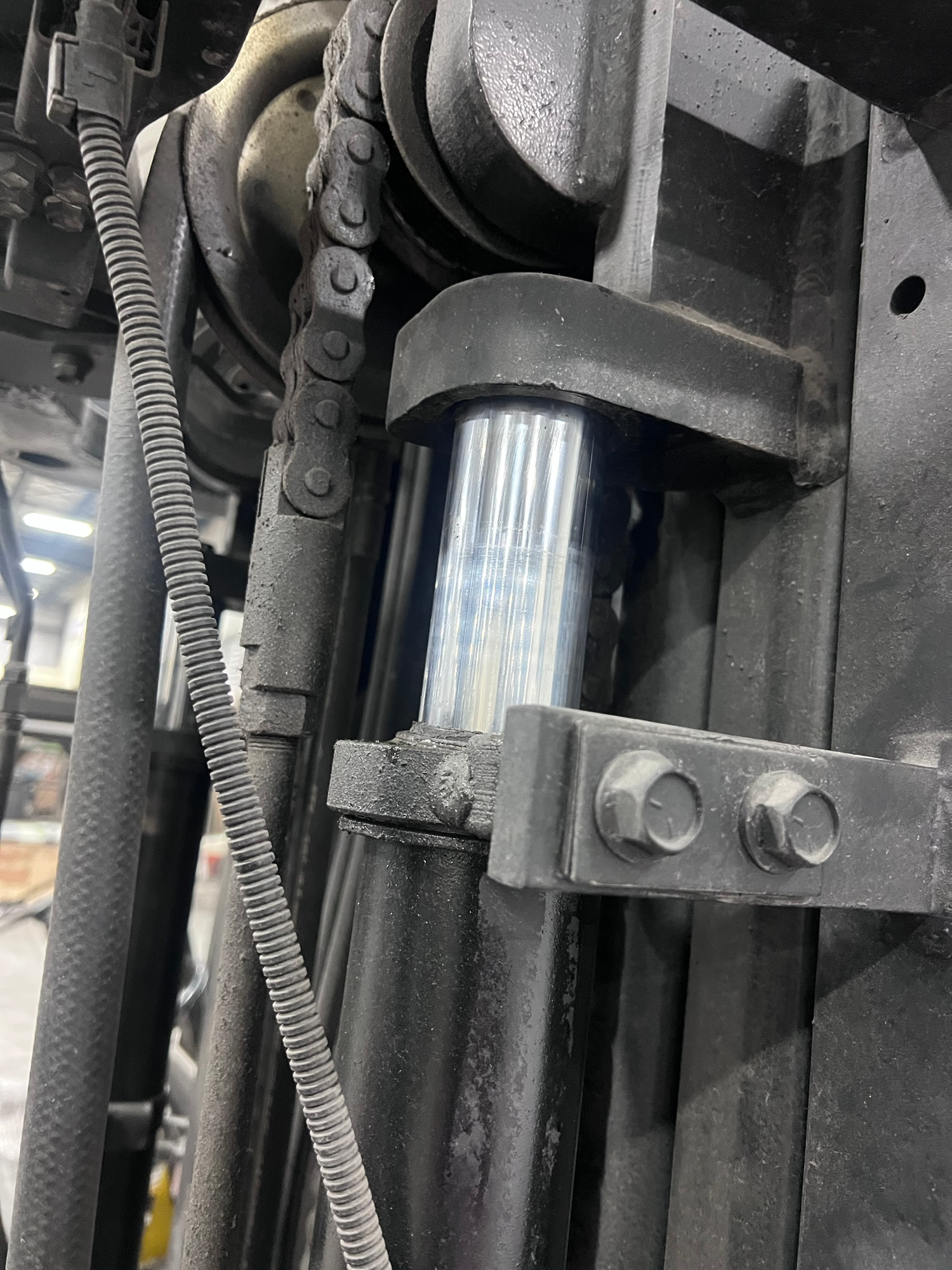
Forklifts rely on one system more than any other to do their actual work: hydraulics. Lifting, lowering, tilting, and even steering on some models all depend on hydraulic power. When the hydraulic system is healthy, forklift operation is smooth, precise, and safe. When it isn’t, productivity drops fast—and safety risks rise sharply.
Understanding how forklift hydraulic systems work and why regular inspection and repair matter is critical for any operation that depends on material handling equipment.
How Forklift Hydraulic Systems Work
Forklift hydraulic systems use pressurized hydraulic fluid to transfer force. The basic components include:
- Hydraulic pump – Creates fluid pressure
- Hydraulic fluid – Transfers power through the system
- Control valves – Direct fluid to specific functions
- Hydraulic cylinders – Convert pressure into lifting or tilting force
- Hoses and fittings – Carry pressurized fluid throughout the truck
- Reservoir and filters – Store and clean the fluid

When the operator pulls a lever, pressurized fluid flows into a cylinder, pushing a piston that raises the mast or tilts the forks. It’s a simple concept—but one that depends on tight tolerances and clean, leak-free components.
Why Hydraulic Systems Wear and Fail
Forklift hydraulics operate under extreme pressure, often thousands of PSI. Over time, normal use and harsh environments take their toll.
Common causes of hydraulic issues include:
- Hose aging and dry rot
- Seal wear inside cylinders and valves
- Contaminated or degraded hydraulic fluid
- Overheating due to heavy or continuous use
- Physical damage to hoses or fittings
- Improper fluid levels or wrong fluid type
Even small problems can escalate quickly when high pressure is involved.

Warning Signs of Hydraulic Problems
Hydraulic failures rarely happen without symptoms. Operators and supervisors should watch for:
- Slow or weak lifting
- Forks drifting down when controls are neutral
- Jerky or uneven mast movement
- Hydraulic fluid leaks or wet hoses
- Whining or cavitation noise from the pump
- Overheating hydraulic fluid
- Reduced tilt or lift capacity
Any of these signs indicate the system needs immediate attention.
Safety Risks of Neglected Hydraulics
Hydraulic failures are not just mechanical issues—they are serious safety hazards.
Neglected hydraulic systems can cause:
- Sudden load drops
- Uncontrolled mast movement
- Forks drifting while elevated
- Loss of steering or braking assist (on some models)
- Slip hazards from leaking fluid
- Catastrophic hose failures under pressure
A single hydraulic failure can injure operators, damage inventory, or shut down an entire operation.
The Importance of Regular Hydraulic Inspections
Daily Operator Checks

Operators should visually inspect:
- Hoses and fittings for leaks or cracks
- Mast cylinders for oil residue
- Smooth lift and tilt operation
- Proper fluid levels (if accessible)
Catching issues early prevents system-wide damage.
Scheduled Professional Maintenance
Qualified technicians can:
- Pressure-test hydraulic systems
- Replace worn hoses and seals
- Inspect pumps and control valves
- Change filters and hydraulic fluid
- Identify internal leaks or cylinder bypass
- Verify system pressures meet specifications
Preventive service extends component life and maintains safe operation.
The Cost of Ignoring Hydraulic Maintenance
Delaying hydraulic repairs often leads to:
- Pump or valve failure
- Contaminated systems requiring full flushes
- Expensive cylinder rebuilds
- Unplanned downtime
- Increased risk of accidents and injuries
A leaking hose might seem minor—until it bursts under load. Preventive maintenance is far less costly than emergency repairs or lost productivity.
Best Practices for Forklift Hydraulic Care
To keep hydraulic systems reliable:
- Train operators to report leaks immediately
- Replace hoses proactively, not after failure
- Keep hydraulic fluid clean and at proper levels
- Use manufacturer-approved fluids and filters
- Protect hoses from abrasion and pinch points
- Maintain accurate service records
Consistency is key to hydraulic system longevity.
Final Thoughts
Forklift hydraulic systems are the muscle behind every lift, tilt, and load movement. Without proper inspection and maintenance, they become one of the biggest safety and reliability risks in a warehouse or job site.
Regular hydraulic inspections and timely repairs protect operators, prevent costly breakdowns, and keep forklifts performing at their best. In material handling, dependable hydraulics aren’t optional—they’re essential.