
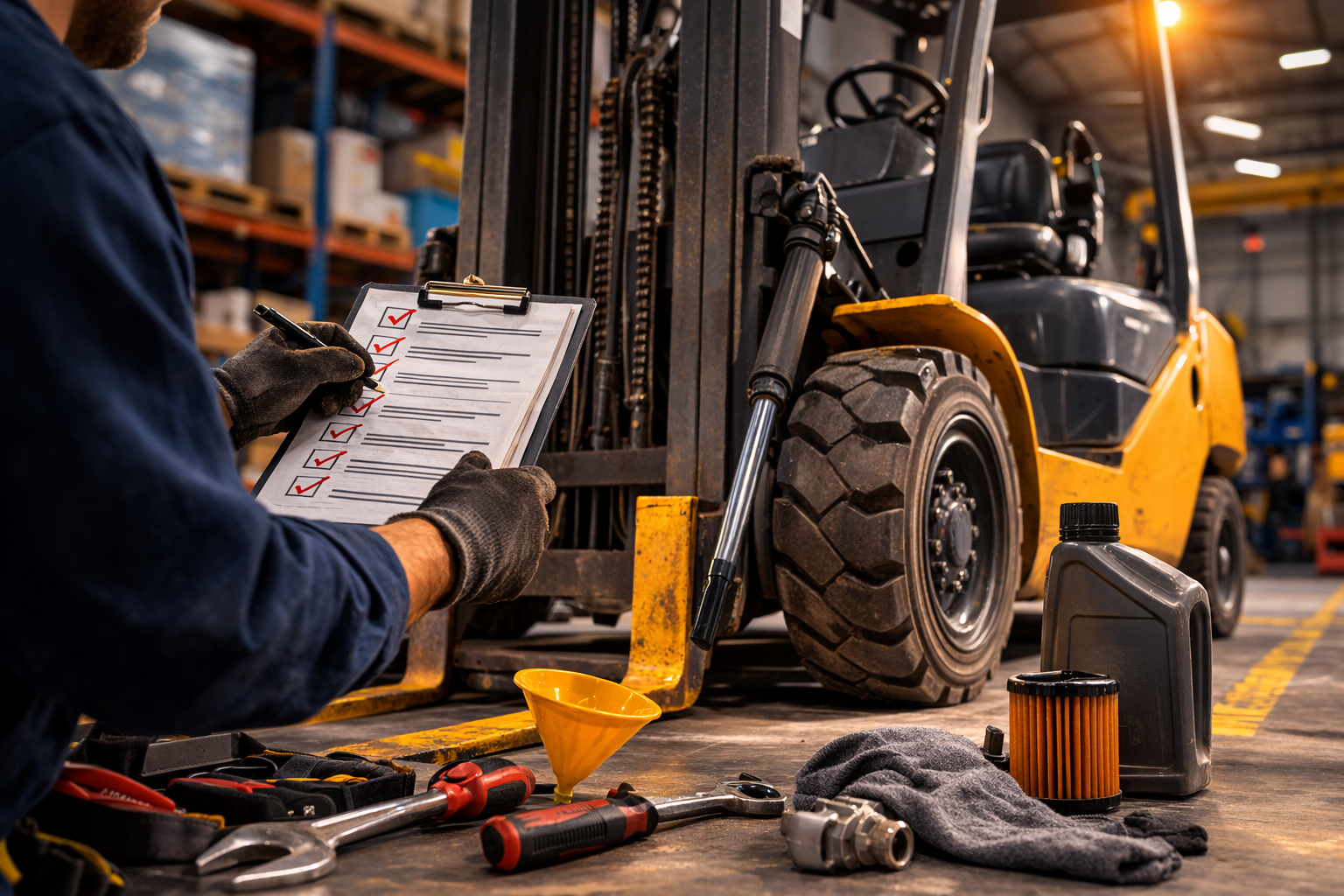
Forklifts are among the hardest-working machines in any warehouse, plant, or distribution center. They operate in tight spaces, carry heavy loads, and often run for multiple shifts each day. With that level of demand, breakdowns aren’t a matter of if—they’re a matter of when.
That’s where preventive maintenance (PM) inspections come in. A well-executed PM program doesn’t just keep forklifts running—it protects operators, reduces downtime, and saves significant money over the life of the equipment.
What Is Preventive Maintenance for Forklifts?
Preventive maintenance inspections are scheduled, systematic checks performed to identify wear, damage, or developing problems before they cause failures or safety incidents.
Unlike reactive repairs, PM inspections focus on:
Early detection of issues Maintaining manufacturer specifications Ensuring safe operation Extending equipment lifespan
A proper PM inspection evaluates the forklift as a complete system, not just individual components.
Why Preventive Maintenance Inspections Matter
Forklifts are safety-critical machines. A small mechanical issue can quickly become a serious hazard.
Preventive maintenance inspections help:
Prevent accidents and injuries Reduce unexpected breakdowns Maintain consistent performance Extend component and truck life Lower total cost of ownership Support regulatory compliance
Simply put, PM inspections turn maintenance from a crisis response into a controlled process.
Key Areas Covered During a PM Inspection
A thorough forklift preventive maintenance inspection typically includes the following systems:
Mechanical and Structural Components
Mast, forks, and carriage for cracks or wear Chains and rollers for stretch and damage Axles, steer components, and bearings Frame and overhead guard integrity
Brakes and Steering
Brake pedal feel and stopping performance Brake wear and hydraulic components Steering response and alignment
Hydraulic System
Hoses, fittings, and cylinders Fluid levels and contamination Smooth lift, lower, and tilt operation
Power System
Internal combustion engines: oil, filters, belts, cooling system Electric forklifts: battery condition, cables, connectors, and chargers
Electrical and Safety Systems
Warning lights, alarms, and horn Seat belt and operator restraints Deadman switch and directional controls
Each inspection ensures the forklift meets safe operating standards before it returns to service.
Daily Operator Inspections vs. Scheduled PM Inspections
Daily Operator Inspections
Operators are the first line of defense. Daily checks focus on:
Obvious damage or leaks Brake and steering feel Tire condition Proper operation of controls
These inspections catch immediate issues but are not a replacement for professional maintenance.
Scheduled Preventive Maintenance Inspections
Performed by trained technicians, PM inspections:
Measure wear limits Identify internal or hidden failures Adjust systems to specifications Replace filters, fluids, and worn components
Both are essential—and work best together.
The Cost of Skipping Preventive Maintenance
When PM inspections are ignored or delayed, the consequences add up fast:
Unplanned downtime during peak operations Expensive emergency repairs Accelerated wear on major components Increased accident risk Shortened forklift lifespan
A forklift pulled out of service unexpectedly costs far more than one maintained on a schedule.
Best Practices for an Effective PM Program
To get the most from preventive maintenance inspections:
Follow manufacturer-recommended service intervals Adjust PM frequency based on usage and environment Keep accurate inspection and service records Address small issues immediately Train operators to report problems early Use qualified technicians for inspections and repairs
Consistency and documentation are just as important as the inspection itself.
Preventive Maintenance Is an Investment, Not an Expense
Preventive maintenance inspections are often viewed as a cost—but in reality, they are one of the best investments an operation can make. PM programs reduce risk, improve uptime, and ensure forklifts are always ready to work when needed.
In busy material handling environments, reliability isn’t optional. Preventive maintenance inspections are what keep forklifts safe, productive, and profitable day after day.