
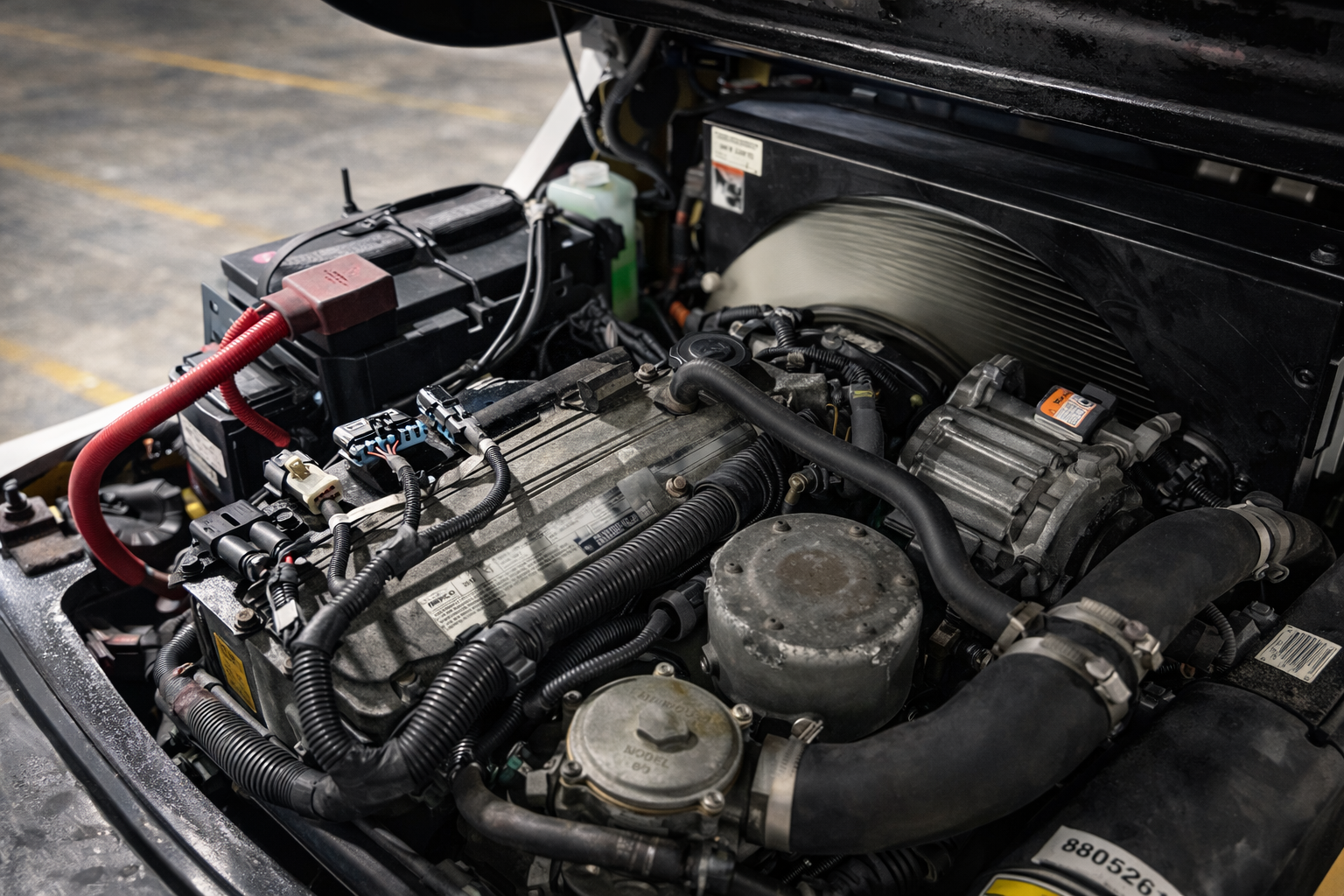
The engine is the heart of a forklift. Whether powered by propane (LPG), gasoline, diesel, or dual fuel, the engine provides the force needed to lift, transport, and position heavy loads day after day. When engine performance begins to decline—or fails altogether—productivity grinds to a halt and safety risks increase dramatically.
Understanding forklift engine repairs and the importance of timely service helps protect your equipment, your operators, and your bottom line.
Why Forklift Engines Require Regular Repairs
Forklift engines operate under demanding conditions. Long run times, heavy loads, frequent starts and stops, and dusty or hot environments all accelerate wear.
Common contributors to engine issues include:
Inadequate preventive maintenance Dirty or clogged air and fuel filters Overheating due to cooling system issues Fuel system contamination Worn ignition components Oil breakdown or low oil levels
Unlike road vehicles, forklifts often run for entire shifts without extended cooldown periods, making proper maintenance and repairs essential.
Common Forklift Engine Problems
Forklift engines usually give warning signs before complete failure. Some of the most common issues include:
Hard Starting or No Start
- Weak ignition components
- Fuel delivery problems
- Faulty sensors or controls
Loss of Power
- Poor compression
- Clogged fuel injectors or carburetors
- Restricted air intake
Rough Running or Misfires
- Worn spark plugs or ignition coils
- Vacuum leaks
- Incorrect fuel-air mixture
Overheating
- Radiator blockage
- Failed water pump or thermostat
- Low coolant levels
Excessive Smoke or Odors
- Oil consumption issues
- Fuel system problems
- Exhaust or emission system faults
Addressing these symptoms early can prevent major engine damage.

Safety Risks of Ignoring Engine Repairs
Engine problems are not just performance issues—they can become serious safety hazards.
Neglected engine repairs can lead to:
- Sudden stalling under load
- Loss of power while elevated
- Fire hazards from fuel or oil leaks
- Excessive exhaust fumes in indoor environments
- Damage to driveline or hydraulic systems
An unreliable engine puts both operators and surrounding workers at risk.
What Forklift Engine Repairs Typically Include
Professional forklift engine repair services may involve:
Diagnostic testing and fault code analysis Fuel system cleaning or component replacement Ignition system repairs Cooling system service and repairs Valve adjustments and compression testing Oil leak diagnosis and repair Engine rebuilds or replacements when necessary
Experienced technicians ensure repairs meet manufacturer specifications and safety standards.
Preventive Maintenance vs. Emergency Engine Repairs
Preventive maintenance is the best defense against costly engine failures.
Preventive Engine Maintenance
- Regular oil and filter changes
- Air and fuel filter replacement
- Cooling system inspections
- Belt and hose checks
- Scheduled tune-ups
Emergency Repairs
- Often cost more
- Cause unplanned downtime
- Increase the risk of secondary damage
A proactive maintenance program significantly reduces emergency engine repairs and extends engine life.
The Cost of Delaying Engine Repairs
Delaying engine repairs can result in:
- Complete engine failure
- Damage to transmissions or hydraulic pumps
- Increased fuel consumption
- Reduced lifting performance
- Extended equipment downtime
In many cases, early repair can mean the difference between a simple fix and a full engine replacement.

Best Practices for Forklift Engine Care
To maximize engine reliability:
- Follow manufacturer-recommended service intervals
- Train operators to report performance changes immediately
- Address warning lights and fault codes promptly
- Keep cooling systems clean and unobstructed
- Use proper fuel and lubricants
- Maintain detailed service records
Small habits make a big difference in engine longevity.
Final Thoughts
Forklift engine repairs are critical to maintaining safe, efficient, and productive operations. A well-maintained engine delivers consistent power, reduces downtime, and protects operators from unexpected failures.
By investing in regular inspections, preventive maintenance, and timely repairs, businesses ensure their forklifts stay reliable workhorses instead of costly liabilities. When it comes to forklift engines, proactive care is always the smartest move.